Meditech EHR Complete Redesign
Leading the end-to-end redesign and rebuild of the analyzer workflows within Meditech Expanse Laboratory. Design, code, design system, components, everything is on the table.
Context
I joined Meditech at the start of a full, ground-up rebuild of its Laboratory Information System. The project required a new codebase, new workflows, new interaction patterns and a new design system, all designed to replace a legacy system first built in 1976.
I was embedded as the UX / Product Designer on the Analyzer team, working with 5 developers in an Agile model (Kan-Ban and sprinting). The environment required high ownership, fast decision-making, and deep trust between design and engineering—values that strongly align with modern tech culture.
Problem
Department-based silos forced users to navigate multiple desktops to process a single specimen
Critical information was hidden behind menus
High cognitive load led to complex training
Implementation was complex due to inconsistent workflows across departments, and kitchen sink-type builds
The system was optimized for historical constraints - not for how lab technologists actually work
My Role
End-to-end workflow redesign
Product thinking and UX strategy
UX research: user interviews, stakeholder interviews, visual thinking strategy sessions (VTS), user testing, site visits, journey mapping
Collaboration with developers and QA in Agile methodology
Early system, navigation, and interaction patterns design and research

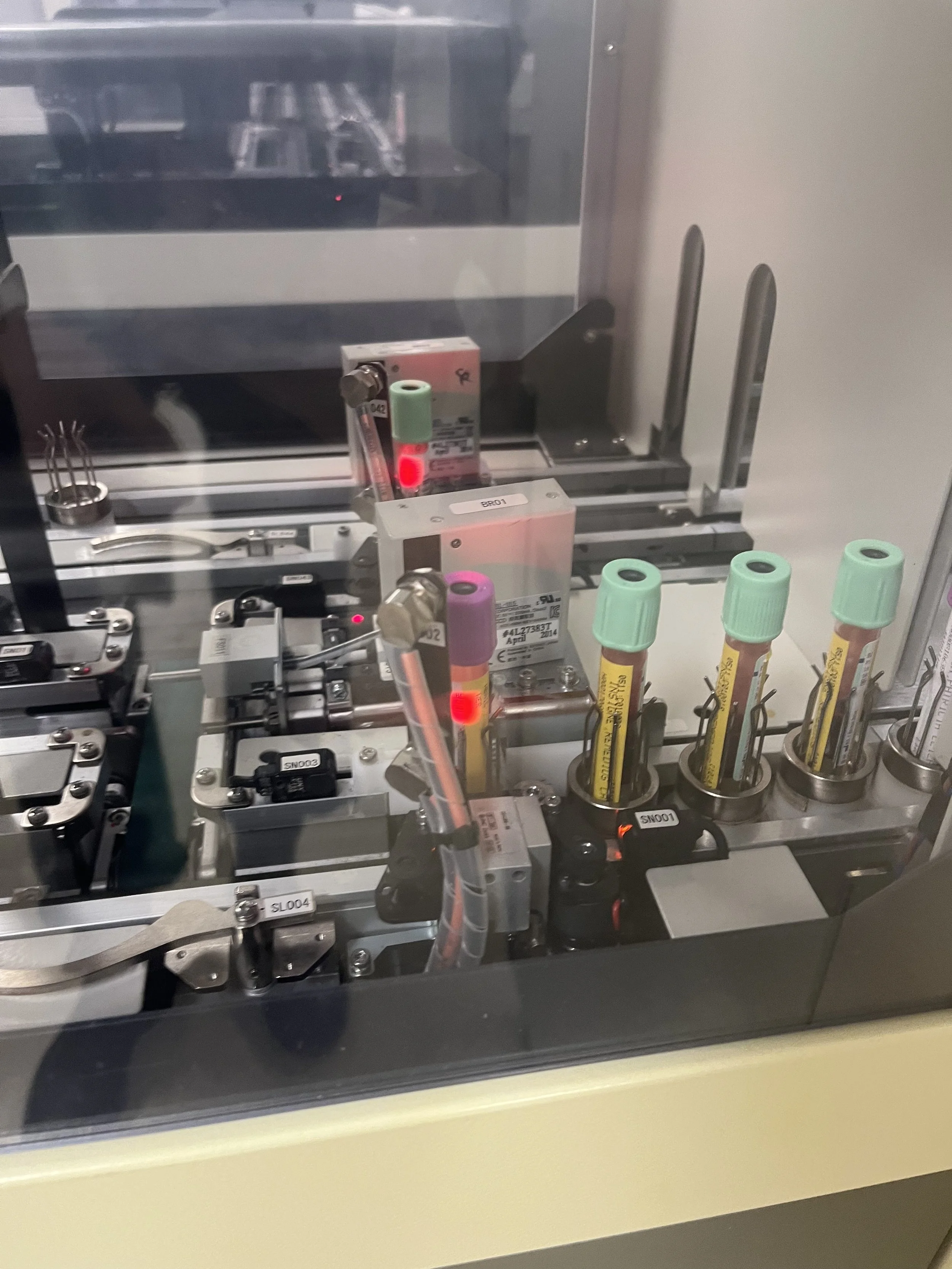
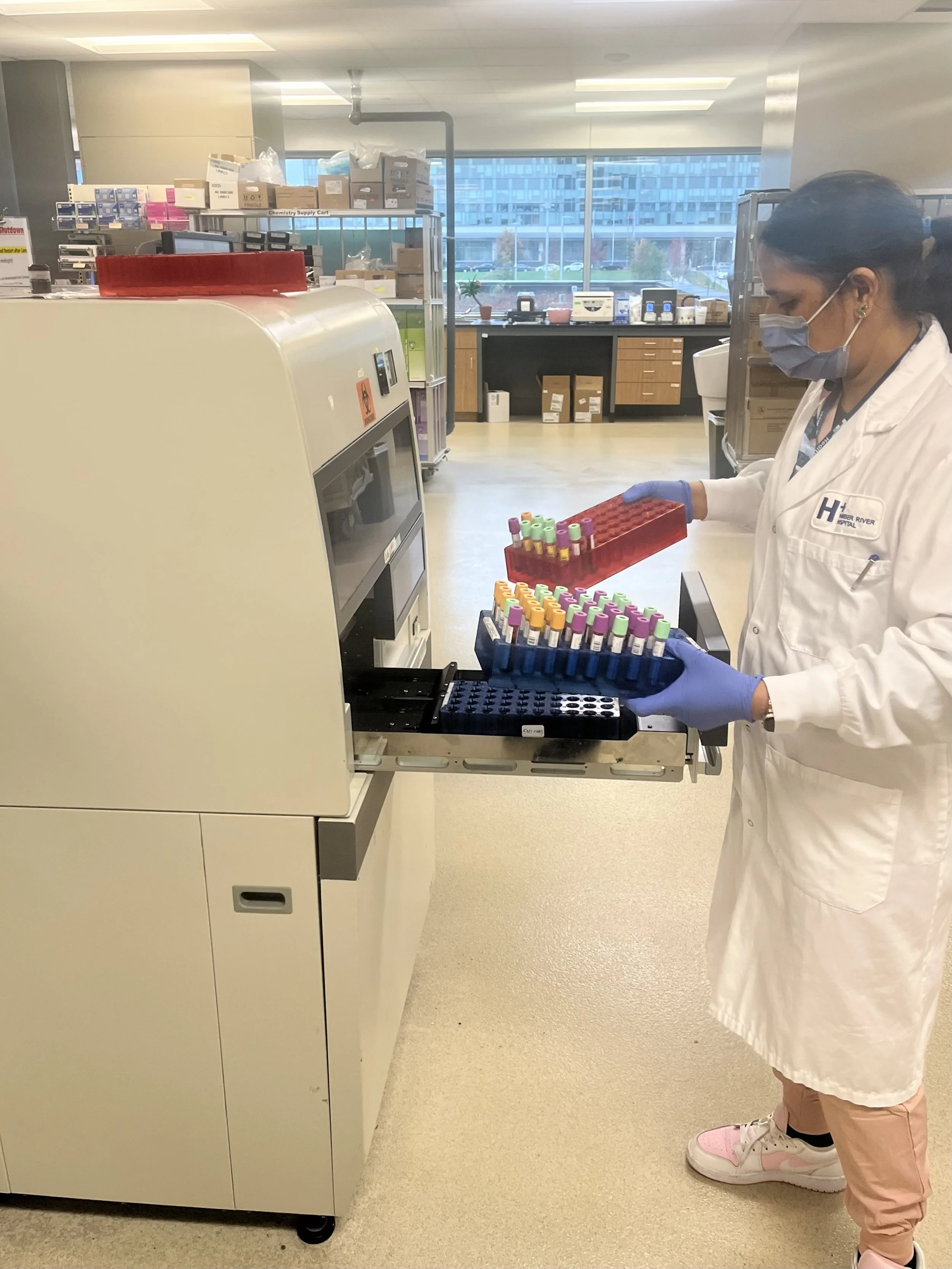
Traveling to Toronto, Ontario for site visits to leading Canadian hospitals
Specimens - not patients or tests - are the true unit of work in hospital laboratories.
Designing around anything else does not make sense.
Solutions
Eliminate the Silos by Shifting to a Specimen Centric Model
Before: Users had to navigate between multiple the desktops and routines in multiple departments to attend to one specimen.
After: A single, unified specimen tracker spanning all departments and analyzers. The silo is not the center of the workflow anymore, the specimen is.
Impact:
Lower cognitive load - the screens make sense
No duplicated effort
Shorter learning curve for new users
Improved traceability - reduced errors
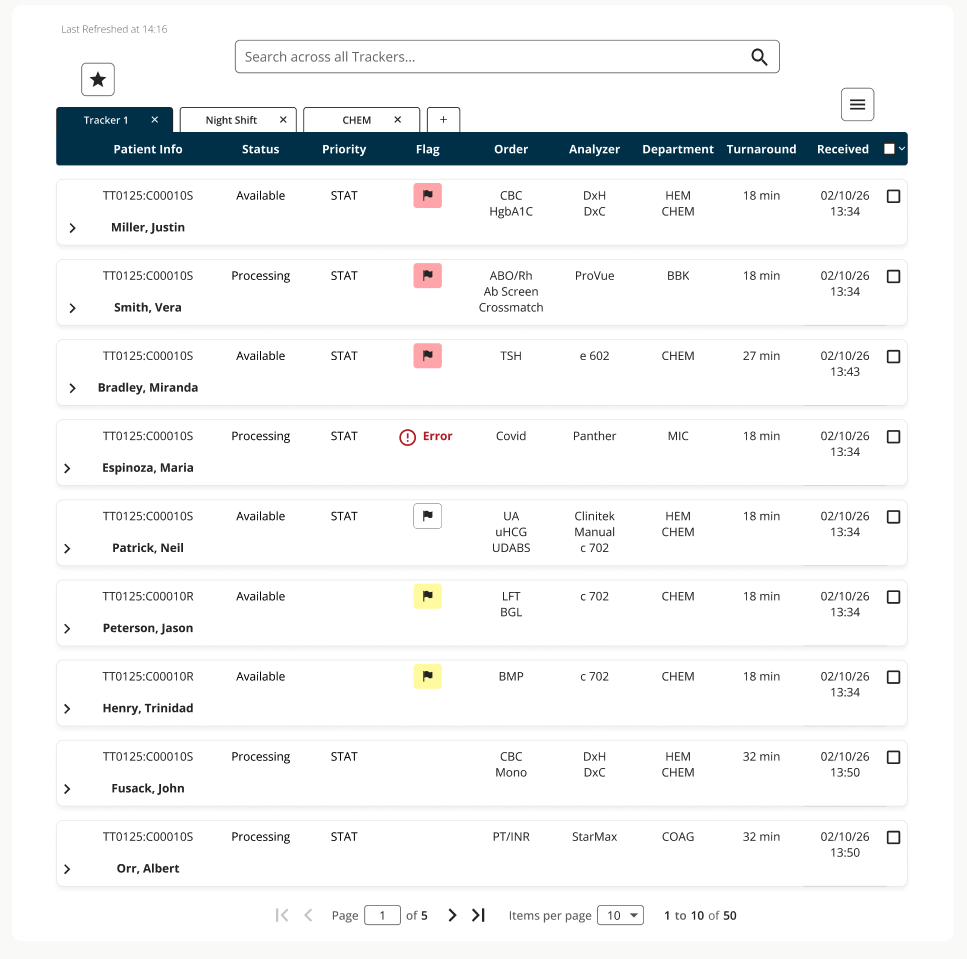
Specimen Tracker - Tracking all pending specimens across all lab departments - Each card is a Specimen
Design the Specimen Tracker
The Specimen Tracker became the primary workspace for lab technologists.
From this single surface, users can:
Process specimens from analyzers
Perform manual resulting
Review and act on critical values
Compare historical results
Document decisions
View a complete audit trail
Instead of hiding actions in menus, the UI pushes relevant information and actions to users at the moment they are needed.
Impact:
Designed to significantly reduce cognitive load
Reduced time spent searching for information
Increased confidence during result verification
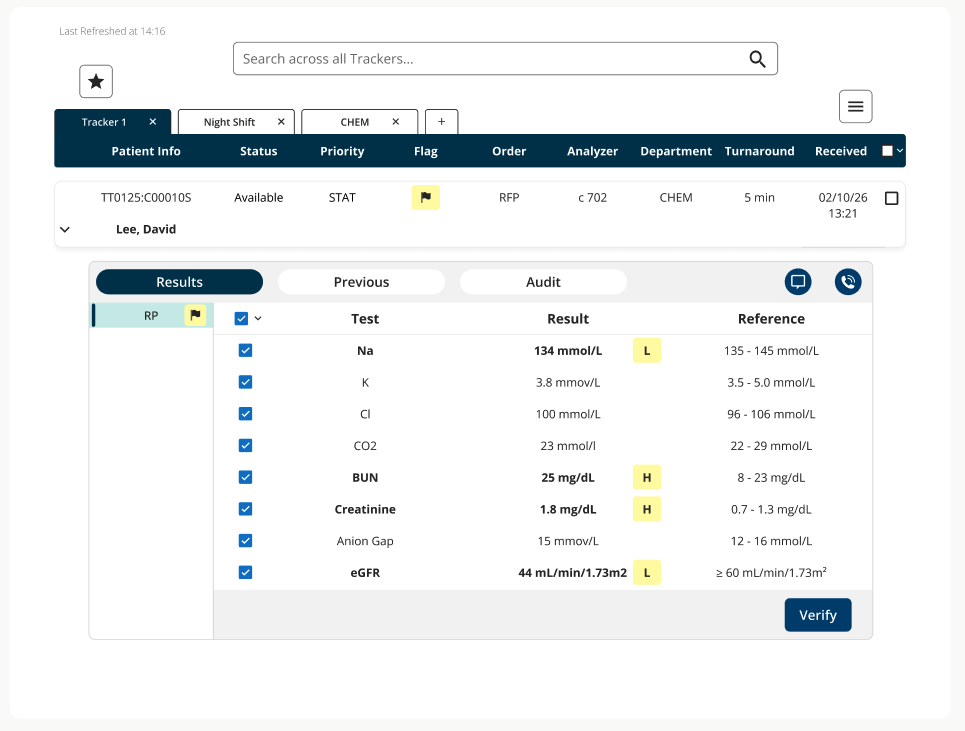
Opened Specimen Card - Verifying a Result
Design for Scale and Flexibility
Labs vary widely in size, staffing, and shift structure.
The tracker supports:
Filtering by specific analyzers or benches (day-to-day workflow)
Viewing all departments and analyzers (night shift, small hospitals)
Easily accessible settings and preferences
Impact:
Single workflow adaptable across environments
Reduced need for role- or site-specific interfaces
Shorter implementation timelines
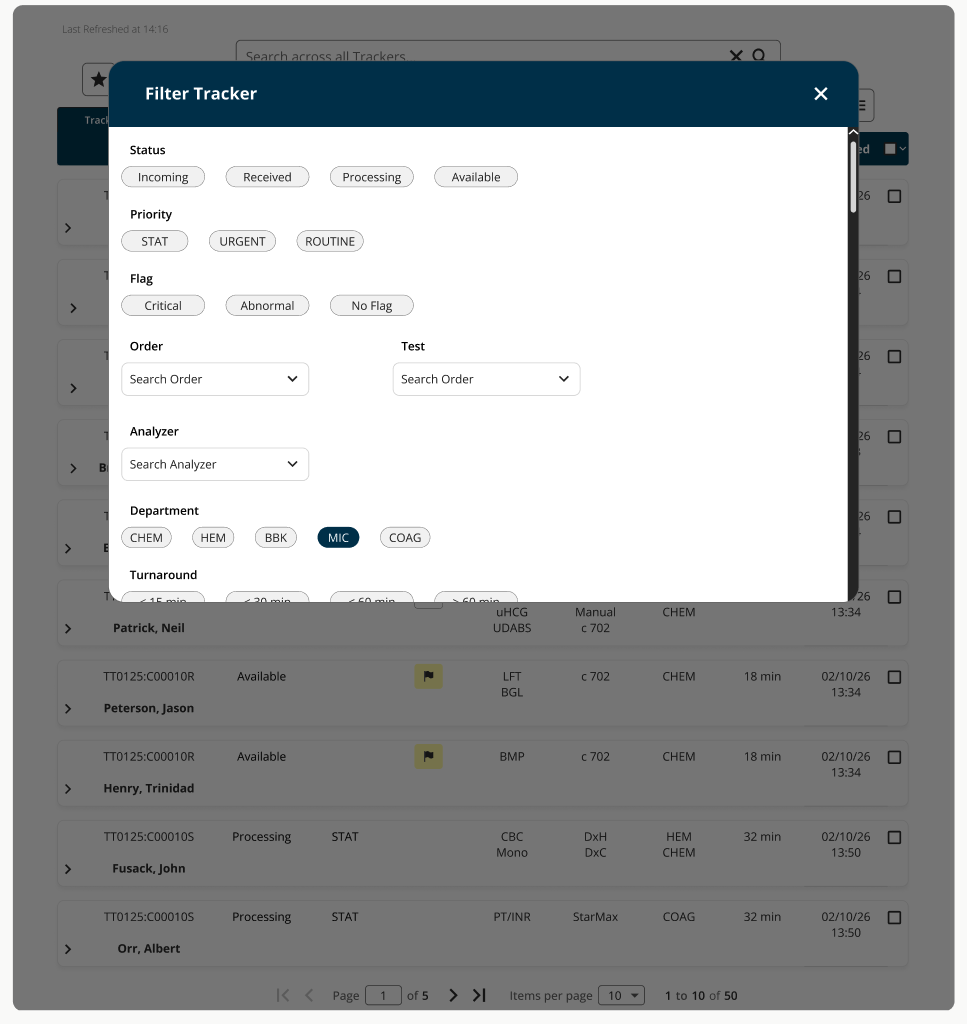
Filtering Functionality
Accessibility
Accessibility was built-in from the start.
WCAG 2 compliant designs
Team trained with an accessibility coach
Considered keyboard navigation, focus states, and screen reader behavior early
Pain Points
Constraints
No established design system, navigation model, and minimal component library
High ambiguity across teams
Frequent leadership reviews requiring polished, cohesive designs
How we addressed the gaps:
Created a prioritized list of needed components
Partnered closely with the design system team
Built an interim XLIS component library using accessibility-compliant standards
Shared components across teams to reduce design and engineering debt
This project has been an amazing opportunity to lay the groundwork for a massive infrastructure impacting the lives of so many patients and healthcare workers across the world.
It has definitely required comfort evolving within the gray, taking one step at a time, trusting my voice and skill in navigating a corporate environment.
This is the first step for Meditech into a new paradigm that puts the user at the center of all interactions.